This week, on my journey with MCO426, I went to Wikipedia and edited an article about the Upper East Side, a neighborhood known for its cultural spots and wealthy residents. I found this process a bit difficult at first because the areas needing improvement weren’t clear, as it required careful attention and a good grasp of the topic. I used a fact-checking tool to spot any errors, which was very helpful in sorting through a lot of details and making sure everything was correct. As I looked through different sources, I learned more about the area’s history, buildings, and its importance in New York City, which helped me make better edits and deepened my understanding of the Upper East Side.
Once I found my mistake, I shared it on a discussion board about other changes to the article, hoping that the helpful community would offer ideas or fixes for my own work. This was a confusing time for me because Wikipedia isn’t very organized or easy to look at; the layout often felt scary, filled with many links, coding options, and too much information that could easily confuse someone new. When I tried to make the actual edit, I wasn’t sure where to click, feeling a bit lost among the different editing tools and choices in front of me. It took some trial and error, along with a lot of patience, to wade through the mess and find the right spot to make my changes, but I stayed focused on making the content better for those who would read it later.
So, I wouldn’t say my view of Wikipedia has changed much. Rather, it may have gotten slightly worse because the website’s lack of organization makes it more difficult to use. The abundance of information available can feel overwhelming at times, and navigating through the various articles often leads to frustration. Additionally, the presentation of content can vary significantly from one entry to another, which may confuse users who are seeking reliable information. As a result, while I appreciate the collaborative nature of the platform and the wealth of knowledge it offers, the overall user experience has been negatively impacted by these organizational challenges.
What I Decided to Edit
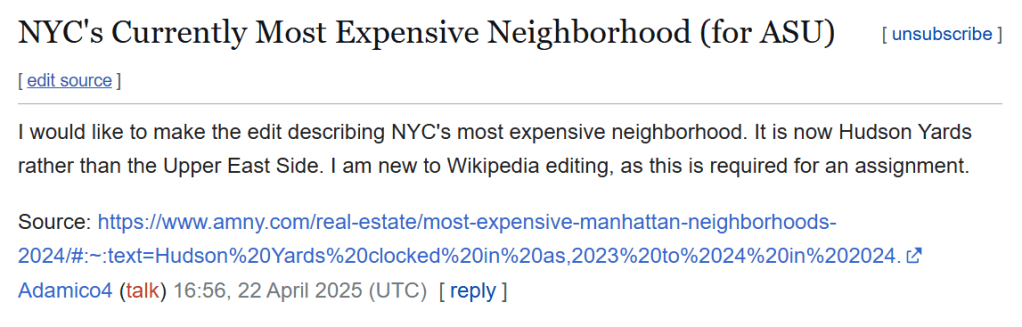
After sharing my idea above, it seems like no one felt the need to respond to my thought that the Hudson Yards should be called the richest neighborhood in Manhattan, which surprised me given the area’s fast growth and the number of high-end stores that serve well-off residents and visitors. Hudson Yards has become a symbol of luxurious living and fancy shopping, boasting not just famous brand shops but also beautiful homes that attract wealthy buyers. I thought there would be some talk or discussion about such a claim, especially considering the neighborhood’s striking architecture and features that obviously make it different from other parts of the city.
Final Word
The Upper East Side’s cultural richness and wealth stood out, but Wikipedia’s disorganization made editing challenging. Despite hurdles, the process deepened my understanding, though the platform’s usability needs improvement.


 MCO 427
Leave a comment