This has made misinformation one of the hallmarks of the digital era, capturing the popular sentiment and affecting mass behavior. In the fight against this, educational sites such as the RumorGuard by the News Literacy Project and interactive games such as Bad News are designed to educate users on the mechanics of misinformation – and how to counter it. Having tested them both, I discovered that each of them has its own advantages, as well as weaknesses.
RumorGuard: Media Literacy and Fact-Checking in Real Time
RumorGuard is a web-based application created by the News Literacy Project that allows users to analyze viral posts, images, and news articles. It acts as a fact-check encyclopedia, with each post disaggregating the veracity of a claim as true, false, or misleading. The site has a uniform structure. This includes locating sources, verifying evidence, and analyzing background, which will help users to navigate the verification process.
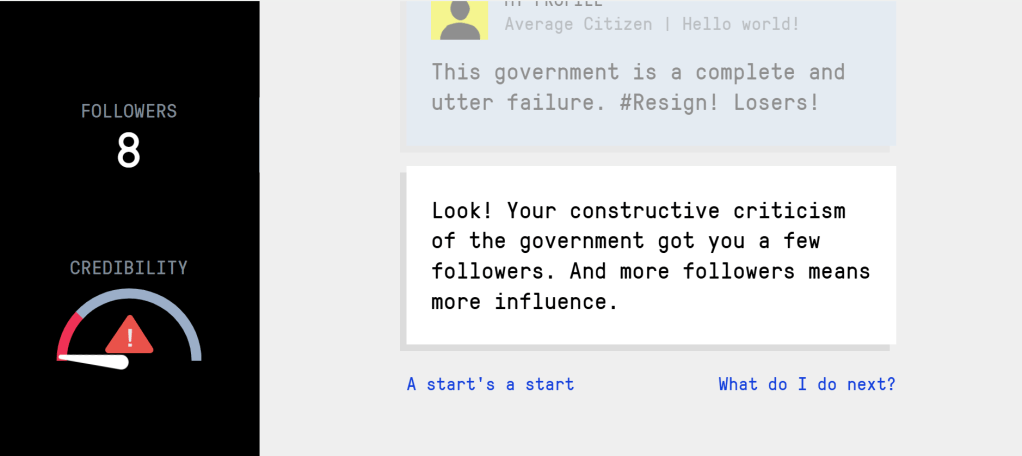
RumorGuard is easy to use. The user can browse recent claims or search a specific topic. Every post includes a clear explanation of why the statement is true or false, with references to reliable sources. This renders it a source of fact-checking and a pedagogical aid.
RumorGuard can be very useful in the encouragement of critical thinking. It does not simply inform users of what is true or false; it tells how. It is important since it has been shown that merely addressing the misinformation is not as effective as educating individuals on how to judge information on their own. The hierarchical decomposition aids users in committing habits such as lateral reading and source checking.
Bad News: Learning via Playing the Misinformation Game
Bad News does it in a very different way. It is an interactive game in which the participants of the game take the role of a misinformation creator. The idea is to acquire supporters and power through such methods as emotional manipulation, conspiracy theories, and polarization.
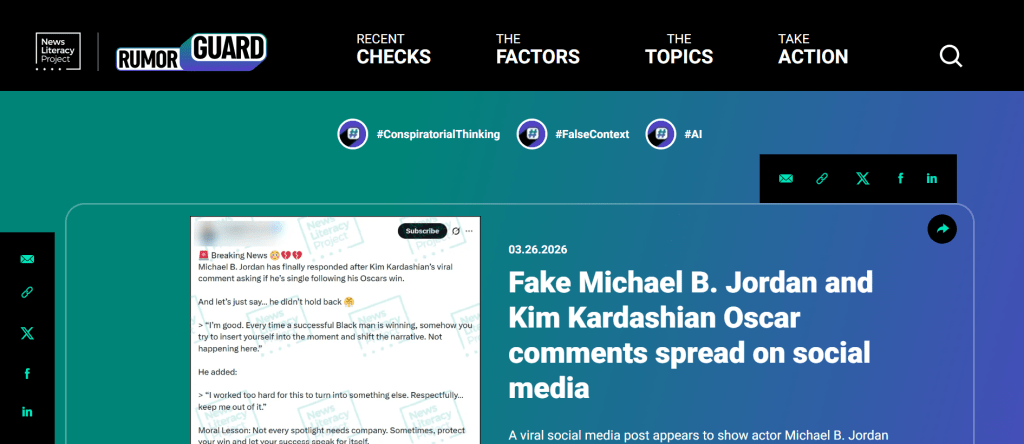
The game is easy to play. The player gets to choose the way in which he or she should create posts, reply to enemies, and nurture their presence on the web. The game also unleashes the most critical forms of misinformation, such as impersonation, trolling, and the exploitation of outrage, as it advances. Through such practices, the players are able to learn the tricks of misinformation and its transmission.
This is one of the major strengths of the game because it is very engaging and memorable. It is not like the conventional educational tools, which bring an emotional and experiential knowledge of misinformation. Nevertheless, it is simple as well, which can be viewed as a disadvantage.
The Strengths and the Weaknesses of Interactive Learning
Both RumorGuard and Bad News emphasize the possible power of interactive tools to counter misinformation. RumorGuard is best at learning to think critically and strengthening the use of Evidence-based thinking, whereas Bad News develops a sense of how to avoid manipulation through playing a game.
Overall, educational games and interactive tools can be influential since they do not involve passivity but active interaction with users. The literature in the education field indicates that active learning enhances learning and memorization. Such tools also bring abstract notions, such as misinformation strategies, closer to the ground and closer to the reader.


 MCO 427
Leave a comment